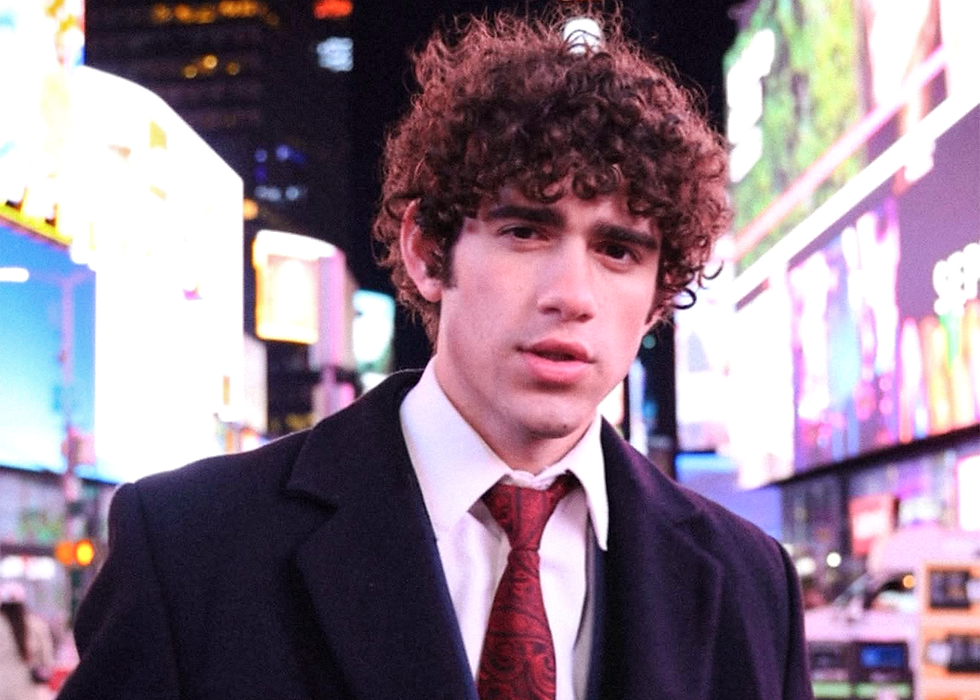
Anthony Nanakornpanom on Stunts, Hollywood and Chasing Big Dreams

Updated: Aug 19
When audiences watch a Hollywood action movie, they see the finished product: the fights, car crashes, explosions and impossible-looking stunts. What they don't always see is the preparation, physical skill and mental discipline required to make those moments look effortless.

For stunt performer, actor, stunt coordinator and firearms instructor Anthony Nanakornpanom, that work has become a career spanning film, television and video games. His résumé includes recent productions such as The Odyssey, The Mandalorian and Grogu and Moana, along with projects including Extraction, Blackhat, Peppermint, The Last of Us Part II and the Resident Evil franchise.
But Nanakornpanom's story is about more than the projects listed on IMDb. It's also about growing up with big ambitions, dealing with rejection, learning to stay calm in dangerous situations and adapting to an entertainment industry that continues to change. What makes Nanakornpanom's story so interesting isn't simply the list of productions. It is how he got there.
From Martial Arts to Hollywood
Nanakornpanom began studying martial arts at a young age and earned his black belt at 18. He eventually expanded his training into disciplines including Tang Soo Do, Taekwondo, Wing Chun, Silat and capoeira. For him, martial arts became the foundation for everything that followed.
He says martial arts became the foundation for his career in stunts.
His path into Hollywood, however, wasn't built around having a major industry connection waiting for him. Nanakornpanom said he didn't have contacts when he first started.

A chance connection through Chinese martial artist and actor Sammo Hung eventually introduced him to a small stunt team. Before fully entering the stunt world, Nanakornpanom had also done bodyguard and executive protection work. He eventually moved to Los Angeles with the goal of getting closer to Hollywood.
That decision was influenced by his upbringing. Although he was born in Los Angeles, he grew up in Oregon, where he said he didn't feel surrounded by people with the same kind of ambitions he had.
Moving to Los Angeles changed that.
"Everyone has the big dream," Nanakornpanom explained during the interview. For him, Los Angeles became a place where pursuing an unusual career didn't seem quite as unusual.
Hollywood Fighting Is More Than Just Martial Arts
One of the biggest misconceptions about stunt work is that it is simply about being willing to do something dangerous. Nanakornpanom's experience paints a much more
complicated picture.
Stunt work requires coordination, preparation, skill and mental toughness. Some scenes can take months to choreograph, while others have to be created in only a few hours. A 30-second fight scene could potentially take months of preparation depending on the production's needs, director and actors. And sometimes, the danger is very real.

Nanakornpanom described stunt work as an occupation that can put performers' lives on the line. Productions often have medical teams available, and particularly dangerous stunts can require ambulances to be standing by.
That makes the polished action sequence audiences see on screen even more impressive. What looks effortless can require an enormous amount of preparation before the camera ever rolls.
There Is No “Typical” Day
If there is one theme that consistently comes through when Nanakornpanom describes his career, it is unpredictability.
There is no traditional 9-to-5 schedule. Film productions can begin as early as 4 or 5 a.m. and involve 12- to 14-hour workdays. Night shoots can flip that schedule entirely, with performers sometimes working from the evening into the early morning.
Then there is the waiting.
A stunt performer can arrive on set before sunrise and not perform until hours later. Scripts change. Actors arrive late. Directors change their minds. Scenes are rewritten.
The ability to adapt is not an extra skill in this business. It is essential.
As Nanakornpanom explained during the interview, stunt performers have to be prepared for things to change at a moment's notice.
How Much Do Stunt Performers Make?
Stunt work is also a profession with its own pay structure.
Nanakornpanom explained that performers are generally paid through the production company and payroll companies, with stunt performers and actors working under SAG-AFTRA.
Rates are established by the union and are generally based on day rates, with overtime applying after the standard eight-hour day. More experienced performers can also negotiate higher rates, particularly when working as a stunt double for a major actor.
He emphasized that income can vary dramatically depending on how much work a performer gets and the size of the productions they work on.
One of His Favorite Stunt Jobs Included a Bar, a Gun and a Car Crash
One of Nanakornpanom's favorite experiences wasn't necessarily the biggest production he worked on.
It was a television sequence that required him to combine several different skills in one night.
He performed dialogue, ran through a bar while knocking people over, jumped over a table, crashed through a window, grabbed a firearm from a car, fired at pursuing police, performed a 180-degree turn and then had a truck T-bone the vehicle.
The sequence wasn't filmed in one continuous take. Each portion was shot separately, but Nanakornpanom said getting to perform so many different pieces during one night made the experience especially memorable.
For a stunt performer, that's part of what makes the job exciting.
One day might involve a single stunt. Another could require acting, choreography, driving, firearms and physical performance all within the same production.
Chris Hemsworth's Work Ethic Stood Out
Nanakornpanom has worked with plenty of major actors, but he specifically highlighted Chris Hemsworth's dedication while working on Extraction.
After filming for 10 to 12 hours, Hemsworth would still meet with the stunt team at the hotel to rehearse fight choreography.
For Nanakornpanom, that level of commitment separates some of the industry's top performers.
He also praised Tom Cruise, describing him as exceptionally talented and hardworking.
The lesson, according to Nanakornpanom, is simple: wanting to become an action star isn't enough. You have to put in the work.
Actors Don't Always Perform the Most Dangerous Stunts
One common misconception about action movies is that the actors perform everything themselves. Nanakornpanom explained that actors can perform significant portions of their action scenes, but stunt doubles are generally used for the most dangerous impacts. The reason isn't simply safety in the moment.
Productions also need to protect the actor so they can continue filming the rest of their role. Sometimes actors do perform dangerous material themselves, but the stunt team determines what is appropriate based on the scene and the risk involved. That balance between realism and safety is part of what makes action filmmaking work.
Work on The Odyssey to Video Games
Nanakornpanom's résumé is filled with projects that many people have seen without ever realizing he was part of them.
He recounted that working on The Odyssey was among his most unforgettable recent experiences. The production involved much more than just placing actors on a boat. The boat was set on a gimbal, with effects like water, rain, wind, and lightning used to simulate the storm. Additionally, two jet engines were employed to generate wind and sound.
Nanakornpanom’s career has extended beyond Hollywood films and television into the video game world, where his stunt and performance expertise has translated into interactive entertainment. He served as a stunt coordinator for The Last of Us Part II, helping coordinate portions of the game’s action. His connection to video games goes back even further, as he trained actors for the Resident Evil series in firearms and eventually performed in Resident Evil 5. “Early on in my career, I wanted to be part of video games,” Nanakornpanom said. His work in the industry has given him a different perspective on performance, explaining that video games “have taught me a lot about performance detail and standards.”

While video game work has been rewarding, Nanakornpanom said it comes with its own challenges. Unlike film and television, where stunt performers may perform a scene a handful of times, video game performers can repeat physical movements for hours. Nanakornpanom described the work as “a different world” from television and film and said it can be “quite taxing” physically.
Despite that, he has enjoyed the opportunity to contribute to major games and said he has been “proud to be part of quite a few of these games.” His career in gaming shows just how versatile stunt work can be, carrying the same combination of physical skill, performance and preparation from a Hollywood set into the digital world.
Moana, Blackhat and a Career Built on Experiences
Nanakornpanom also worked on Moana, with his portion filmed on stages outside Atlanta, Georgia. His time on that production lasted about a week.
He remembers Blackhat for a different reason.
While the movie may not be considered his biggest production, Nanakornpanom said it was one of the most enjoyable experiences of his career. The production took him to Hong Kong for two weeks, and the location and crew made it particularly memorable.
For him, a favorite project isn't always determined by how successful the finished movie becomes. The people, locations and experiences behind the production can matter just as much.
Hollywood Is Changing
Nanakornpanom's career has also given him a front-row view of the changing entertainment industry. He believes Hollywood and the broader U.S. production industry aren't as busy as they once were. He pointed to productions moving overseas and producers looking for ways to reduce costs and take advantage of financial incentives elsewhere.
He also believes social media has changed the type of entertainment being produced.
Vertical films and short-form shows designed around platforms such as TikTok, Instagram and Facebook are becoming increasingly common. Nanakornpanom said social media has created more work in some areas, although not necessarily the same amount of work in the United States.
Streaming has also changed the economics of the industry. Nanakornpanom explained that DVD sales once contributed to residual income for performers. Today, audiences increasingly stream movies instead, while contracts and residual structures continue to evolve.
The Advice That Kept Him Going
Perhaps the most personal part of Nanakornpanom's story is how he dealt with people who doubted him. He said some of the most discouraging comments he received actually became his greatest motivation. Hollywood constantly involves rejection — not having the right look, the right skill or simply losing a role to someone else.
His approach was to keep getting back up. When asked what advice he would give someone pursuing an unconventional dream, Nanakornpanom emphasized big goals, discipline and mental toughness. He believes people pursuing something unusual may be told they're crazy or unrealistic, but that shouldn't automatically stop them.
For him, the question is simple:
"If someone else can do it, why can't you"?
What’s Next for Anthony Nanakornpanom?
For Anthony Nanakornpanom, the next phase is already unfolding, even though some specifics must stay confidential. Nanakornpanom mentioned he is working on several projects. Currently, he is letting his work speak for itself.
The entertainment industry often enforces strict confidentiality agreements, and he noted that performers cannot discuss project details before they are released. With major projects like The Odyssey and The Mandalorian and Grogu on his résumé, his career is advancing while new opportunities remain on the horizon.
Whatever the future brings, one thing is clear: Nanakornpanom's combination of stunt work, acting, martial arts, and extensive experience keeps him active in an industry where adaptability is essential.