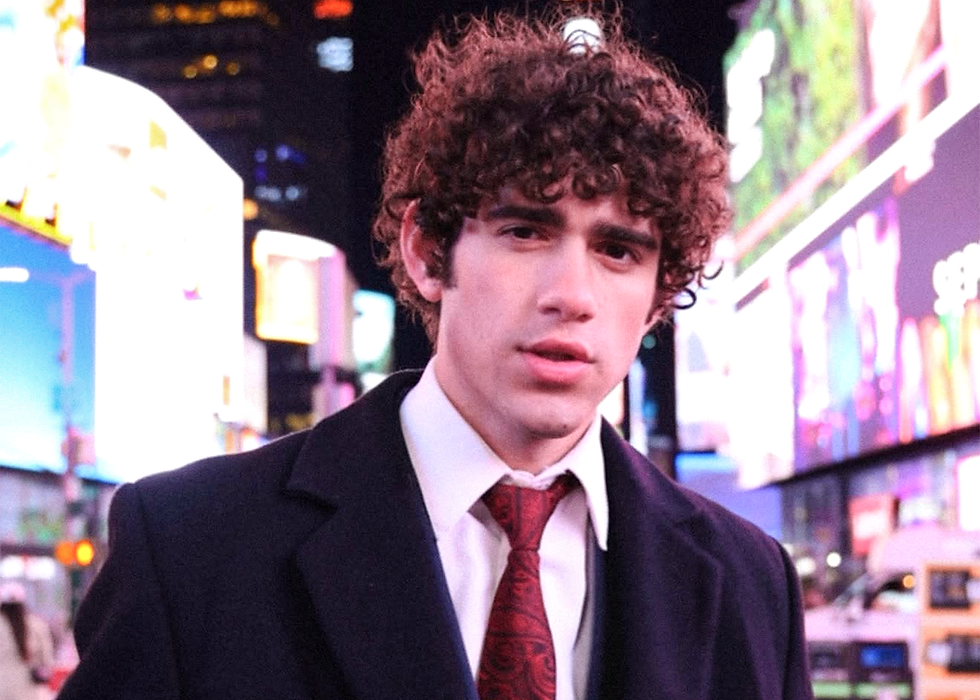
College Bedroom to Lollapalooza Worry Club's DIY Journey

Chicago-based band Worry Club has built its identity around emotional songwriting, energetic performances and a "Do-it-Yourself" mentality. After years of building an audience, frontman Chase Walsh revealed to Too Recklss that the band's next album is already finished and could arrive early next year.

(Worry Club)
For Chicago-based band Worry Club, success has not meant abandoning the approach that started it all.
What began as singer-songwriter Chase Walsh recording music in his college bedroom has grown into a touring project that has reached major festival stages, including Lollapalooza, Riot Fest and Shaky Knees. Along the way, the band has developed a following through a sound that combines emotional songwriting with energetic punk influences and a commitment to doing things independently.
During an interview with Too Recklss, Walsh discussed the band's beginnings, the importance of its DIY approach, the experiences that have shaped its live performances and what listeners can expect next.
Despite the growing crowds and festival appearances, Walsh said the band's identity remains rooted in the same independent spirit that helped launch Worry Club.
“I think that not a lot of people realize, like, how DIY we are,” Walsh said. “We like to save a ton of money, just so that we can tour and play a ton of shows.”
A Band Name Born From a College Job
Worry Club's name did not come from a lengthy brainstorming session or a carefully planned marketing strategy. It started with a hoodie.
While working at a coffee shop during college, Walsh regularly wore a sweatshirt that read “No Worries Club.” He liked the hoodie but was not particularly fond of the wording.
After bringing it up to a coworker, they suggested crossing out the word “No” to create “Worry Club.” Walsh liked the idea and added the name to a document where he kept potential band names.
When it came time to release the project's first EP, he returned to that list. “I made the first, like, EP in that college bedroom, and I needed a name, so I just looked through my little notes doc, and that's the one I chose,” Walsh said.
That bedroom would become much more than a place to write songs. It became the recording space where Worry Club's early identity took shape.
Walsh began writing material in 2019, before the COVID-19 pandemic pushed him to spend more time recording and releasing music independently. With a microphone and a laptop, he began putting songs online and creating videos that helped introduce the project to new listeners.
“I was really just making it for fun, just, like, posting it online,” Walsh said. “It was gaining, like, a little bit of traction.”
When the pandemic arrived in 2020, Walsh continued recording from his bedroom, releasing singles and building momentum online. The process became a foundation for the band, and one he has largely maintained.
Finding Inspiration in the DIY Scene
Walsh's approach to music was influenced by artists who showed him that creating something meaningful did not require a traditional recording studio or a major production budget.
One group that left a lasting impression was Brockhampton. Walsh recalled listening to four of the group's albums back-to-back while driving the band's tour van. Their willingness to create music independently and work together as a collective reminded him of what he wanted Worry Club to become.
“They were just like, screw it, we'll just, like, do it all ourselves,” Walsh said. “I had a microphone in my bedroom. I was like, I'm just gonna do that.”
Growing up in Chicago also introduced Walsh to the Midwest emo scene. He recalled attending shows featuring bands such as Real Friends, Save Face and Born Without Bones, sometimes watching performances with only about 10 people in the crowd.
Rather than discouraging him, those small shows helped convince Walsh that he wanted to start a band of his own.
“Growing up on that, it was also like, damn, I gotta start this band ASAP,” he said.
Worry Club also shares an early connection with Saturdays at Your Place. Walsh attended college with members of the group, and the two bands played some of their first shows together at House Funnies in Kalamazoo, Michigan.
The connection remains part of the band's creative process. Walsh records Worry Club's music himself before sending it to his friend Tyler for mixing. Tyler has also worked with Saturdays at Your Place and recently mixed an album for Harrison Gordon.
Walsh said he recently experienced another first for the project when the band tracked drums in a professional recording studio with Mike and Keane. Although the experience marked a new step for the group, Walsh has not abandoned the recording process that helped establish Worry Club.
Turning Personal Songs Into an Energetic Sound
Worry Club's music often combines emotional subject matter with upbeat instrumentation, creating a contrast that Walsh believes makes the band's sound stand out.
When describing the group to someone unfamiliar with its music, he has a simple explanation.
“We're loud, but we're not scary,” Walsh said. “We're like fun. We're fun punk.”

He added that the band's songs can carry sadness while still giving listeners something they can dance and move around to.
“It's sad music, but it's all dressed up to sound really fun,” he said. Walsh pointed to bands such as PUP and FIDLAR as examples of the type of energetic sound he enjoys. He also praised the Texas-based band ANOHA, describing its members as talented musicians who know how to have fun onstage.
The possibility of collaborating with ANOHA came up during the interview. Walsh said he would be interested in the idea, especially because of the group's energetic approach to music.
“I do love, like, moody bands, but when I go to see some bands live, I'm like, where… when… what point do we start having fun, though?” Walsh said. “I want to jump around.” That philosophy carries into Worry Club's own performances. Walsh said the band builds its sets around different energy levels, moving between faster songs and slower moments before closing with “Too Dumb to Die.”
The closing track has become a particularly memorable part of the band's performances.
“I just get to, like, smash my guitar on stage and try to figure out how to fix it the next day,” Walsh said.
Why Worry Club Keeps Its Live Shows Simple
As Worry Club has moved from small venues to major festivals, the band has resisted adding some of the production elements commonly associated with larger touring acts.
Walsh said the group does not use backing tracks or in-ear monitors during performances. Instead, the musicians rely on their instruments and amplifiers, adjusting to the room and playing as loudly as they need to.

“We don't run any tracks for our shows,” Walsh said. “We're all just, like, free-balling it. We just have guitar amps. No, we don't have, like, in-ears or anything.”
The approach allows the band to perform in different environments without depending on a complicated technical setup.
“We just play to the room,” Walsh said. “We just crank our amps and turn it up really loud.”
Walsh acknowledged that the setup can create challenges, particularly when performing on larger stages where in-ear monitors are often used. But the band has continued to embrace the stripped-down approach.
For Walsh, the priority is keeping the music loud, energetic and accessible rather than making the performance dependent on expensive equipment.
That mindset also connects to the band's broader financial approach. By keeping costs down, Worry Club can put more resources toward touring and reaching new audiences.
The band's growth has taken it from playing in front of small crowds in Chicago to performing at festivals where the experience is considerably different. Walsh described the contrast between playing a 200-capacity venue and arriving at Lollapalooza, where artists are transported around the festival grounds by golf carts.
“After getting your ass kicked in, like, a 200 cap venue in Chicago, and then going to play, like, Lollapalooza, where they golf cart you around everywhere,” Walsh said. “It's just kind of weird. But it's fun.”
The Fans Who Make the Touring Worthwhile
For a touring band, the experience is not always glamorous. Long stretches away from home, exhausting travel days and demanding performance schedules can take a toll.
Walsh said Worry Club was on a six-week tour during the interview and had already spent four weeks away from its members' own beds.
The band has developed a few traditions to make those stretches easier. When the members hit a low point on the road, they often celebrate with a hibachi dinner. The group even has a tip jar at its merchandise table dedicated to funding those meals.
“We have a little tip jar on our merch table, and it says, like, this money goes towards a hibachi dinner,” Walsh said. “We take that money, we throw it all on hibachi, and then we get ice cream.”

But the most meaningful part of touring for Walsh comes from meeting the people who show up to support the band.
He recalled fans traveling five or six hours just to attend a Worry Club performance. Rather than immediately leaving after a set, Walsh makes a point of spending time at the merchandise table, thanking fans and talking with them.
“You drive all this way, and you play, like, a 40-minute set, and then what do you do? You, like, go to bed?” Walsh said. “I gotta go meet these people.”
He also recognizes that approaching a musician after a show can be intimidating for some fans. Even a brief interaction can mean something to someone who traveled a long distance to see the band.
“I give it up for the fans, too,” Walsh said. “Sometimes they just say hi, and I'm like, hell yeah. Thank you. Hello.” Those interactions help make the long stretches on the road worthwhile. For a band that built its audience online, meeting listeners face-to-face offers a different kind of connection.
I'm Freakin' Out and the Songs That Almost Didn't Make It
Worry Club's latest album, I'm Freakin' Out, features 12 tracks, but the final version represents only a portion of the material Walsh had available.
He estimated that approximately 20 songs did not make the album. During the selection process, Walsh kept a running SoundCloud playlist that he shared with the band's manager and other members to get their opinions.
Because he records much of the music alone, Walsh said it can be difficult to determine which songs are worth developing further.
“I'm just, like, here on my laptop, like, making these songs, and I'm, like, so into it, that I usually have to, like, ask somebody else, like, is this any good?” Walsh said. The final 12 tracks came down to what the band wanted to perform live and which songs best represented the current era of Worry Club.
One of the most personal songs on the album is “Too Dumb to Die,” the closing track. Walsh said he originally created it roughly four years before the album was released.
He estimates that he writes around 100 songs each year, making the selection process an important part of his creative routine. Despite being one of his older compositions, “Too Dumb to Die” continued to stand out.
“It stood the test of time,” Walsh said. “I make, like, 100 songs a year, and I always wean it all out, like, cut out the bad ones, but ‘Too Dumb to Die’ really stuck around for a long time.”
The song also features a group of friends joining together for the gang vocals heard toward the end. Walsh recalled gathering friends in a basement in Kalamazoo, setting up multiple microphones and recording the vocals together.

The album's cover also came from an unexpected moment. Worry Club guitarist Dom, who has joined the band on every tour, is a film photographer with thousands of pictures.
For the I'm Freakin' Out artwork, the band selected a photograph featuring a sign that read “Self Mayo.” Walsh said the group found the wording funny, even though he still does not know what it means. A graphic designer eventually removed the wording and replaced it with the album's title.
What's Next: A New Album and Spring Tour
While Worry Club continues supporting I'm Freakin' Out, Walsh revealed during the Too Recklss interview that the band's next album is already completed and could be released early next year.
The update was shared with Too Recklss during the interview, making it the first time Walsh had shared the news with the outlet. “I have, like, the next album done too. It's, like, ready to drop at the top of next year,” Walsh said.
Walsh also offered a possible title for the upcoming project: Don't Do Anything Stupid. The name is not finalized, however, and depends on whether the band's planned album artwork comes together.
“I have a really cool idea for the album cover,” Walsh said. “If the album cover works out, then it will be called that. If it doesn't work out, then it's, like, back to the folder.” The band is also planning to return to the road next spring, with Walsh confirming that new music could arrive before and during the tour.
“We're going on tour next year, for sure,” Walsh said. “We'll be on tour, like, next spring. 100%.”
For a project that started with a microphone in a college bedroom, Worry Club's next chapter represents another step forward. But even as the band reaches larger audiences, Walsh's advice to aspiring musicians reflects the same independent mentality that helped him get started.
“I would say don't wait for anybody else. Just do it. Do it yourself,” Walsh said. He encouraged musicians to use the tools already available to them rather than waiting for the opportunity to afford studio time or secure outside help.
“You can look up a YouTube video like I did and learn how to make music in GarageBand,” Walsh said. “Just do it yourself, don't wait for anybody.”
It is an approach Worry Club has followed from its earliest recordings to its growing festival appearances. And with another album finished and a spring tour on the horizon, the band appears ready to keep building on the momentum it created for itself.